Vanadiumdioxid (VO₂) hat sich als eines der vielversprechendsten thermochromen Materialien für energieeffiziente Technologien der nächsten Generation etabliert. Im Nanomaßstab entwickelt VO₂ außergewöhnliche Eigenschaften, die mit herkömmlichen Materialien nicht erreicht werden können. Dieser Leitfaden untersucht drei entscheidende Nano-VO₂-Materialien—reine PhaseMonokline VO2Nanopartikel,Wolfram-dotiertes VO2 Nanopartikel, UndVO2-Nanodrähte—wird Forschern und Ingenieuren umsetzbare Erkenntnisse für die Materialauswahl und Anwendungsentwicklung geliefert.
---
Die Grundlage verstehen: Warum Nano-VO₂ wichtig ist
Bei etwa 68 °C durchläuft massives VO₂ einen reversiblen Metall-Isolator-Phasenübergang erster Ordnung, der mit drastischen Änderungen der optischen und elektrischen Eigenschaften einhergeht. Dieser Phasenübergang, der durch den Mott-Hubbard-Mechanismus ausgelöst wird, wandelt VO₂ von einem monoklinen Halbleiter in einen rutilen metallischen Zustand um. Massives VO₂ weist jedoch hohe Übergangstemperaturen, eine geringe Lichtdurchlässigkeit im sichtbaren Bereich und eine begrenzte Effizienz der solaren Modulation auf.
Die Nanostrukturierung überwindet diese Einschränkungen durch drei Hauptmechanismen: Quanteneinschluss-Effekte, die die optische Absorption verschieben, ein erhöhtes Verhältnis von Oberfläche zu Volumen, das die Reaktionskinetik verbessert, und die flexible Einbringung von Dotierstoffen, die eine präzise Steuerung von Phasenübergängen ermöglicht. Diese Vorteile machen Nano-VO₂ unverzichtbar für intelligente Fenster, Wärmesensoren, Energiespeichersysteme und neuromorphe Computer.
---
Nano-VO₂-Partikel: Vielseitige Bausteine
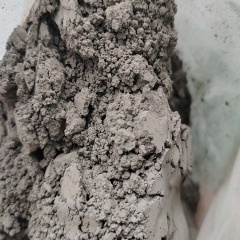
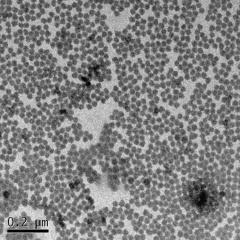
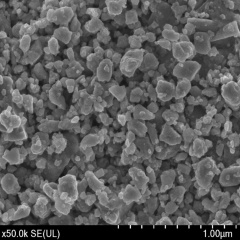
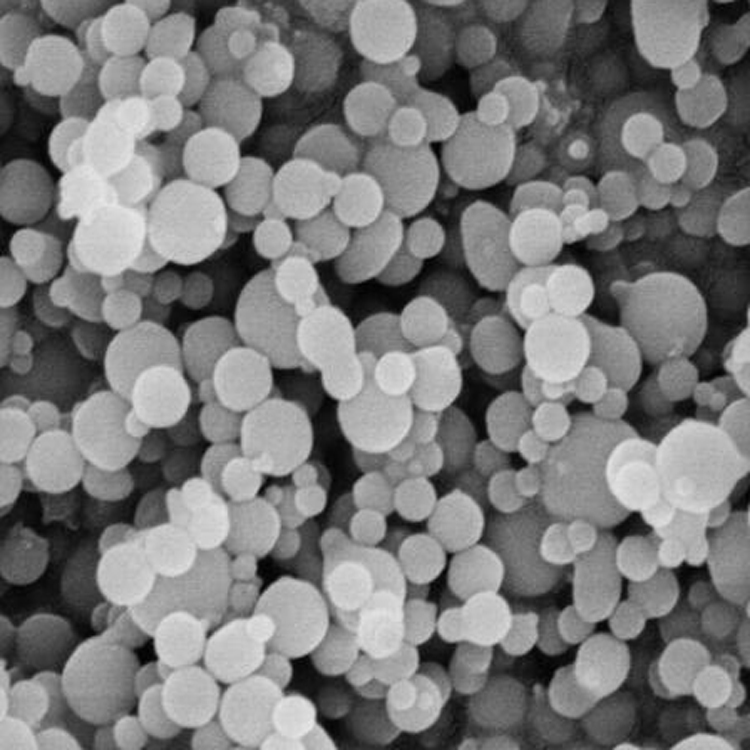
Nano-VO₂-Partikel (typischerweise 100–200 nm) stellen die kommerziell am häufigsten erhältliche Form von nanostrukturiertem Vanadiumdioxid dar. Ihre quasi-sphärische Morphologie ermöglicht eine homogene Dispersion in Polymermatrices, Farben und Beschichtungen.
Wichtigste Leistungsparameter:
- Phasenübergangstemperatur:67 °C ± 3 °C
Die größte Einschränkung von undotierten Nano-VO₂-Partikeln liegt in ihrer hohen Übergangstemperatur, die ihren praktischen Einsatz in Anwendungen bei Umgebungstemperatur, wie z. B. in der Architekturverglasung, einschränkt.
---
W-dotiertes Nano-VO₂: Steuerung des Phasenübergangs
Die Dotierung mit Wolfram ist die effektivste Strategie, um die Phasenumwandlungstemperatur von VO₂ in Richtung Raumtemperatur zu senken. Jedes Atomprozent Wolfram reduziert die Übergangstemperatur typischerweise um etwa 20–26 °C und ermöglicht so eine präzise Kalibrierung für die jeweiligen Anwendungen.
Wichtige Dopingüberlegungen:
Wolframgehalt (Atom-%)
|
Übergangstemperatur (°C)
|
Primäre Anwendung
|
| 0 % |
67 °C ± 3 °C
|
Hochtemperatursensoren
|
| 1% |
45 °C ± 3 °C
|
Industrielle Thermoschalter
|
| 1,5 % |
33 °C ± 3 °C
|
Intelligente Verglasung für Automobile
|
| 2% |
22 °C ± 3 °C
|
Gebäude energieeffiziente Fenster
|
W-dotiertes Nano-VO₂ behält den monoklin-rutilen Strukturübergang bei und führt gleichzeitig lokalisierte elektronische Zustände ein, die die Ladungsträgerbildung bei niedrigeren thermischen Energien begünstigen. Ein zu hoher Wolframgehalt (>3 Atom-%) verschlechtert jedoch die Effizienz der Solarmodulation und verringert die Kristallinität, wodurch eine praktische Dotierungsgrenze für die meisten optischen Anwendungen festgelegt wird.
Für Anwendungen im Bereich intelligenter Fenster zeigen W-dotierte Nano-VO₂-Partikel, die in Polyethylenterephthalat (PET)- oder Polyvinylbutyral (PVB)-Zwischenschichten eingebettet sind, eine solare Modulation von über 15 % bei gleichzeitiger Aufrechterhaltung einer sichtbaren Lichtdurchlässigkeit von über 45 % – und erfüllen damit die Leistungsanforderungen für die Integration in kommerzielle Gebäude.
---
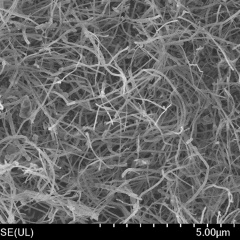
VO₂-Nanodrähte: Eindimensionale funktionale Architekturen
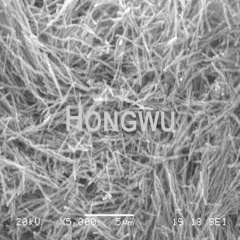
VO₂-Nanodrähte weisen aufgrund ihres hohen Aspektverhältnisses (Länge: 10 µm; Durchmesser: 100 nm) einzigartige anisotrope Eigenschaften auf. Diese eindimensionalen Strukturen zeigen im Vergleich zu partikulären Nanodrähten eine orientierungsabhängige optische Schaltbarkeit, einen verbesserten Elektronentransport entlang der Drahtachse und eine überlegene mechanische Flexibilität.
Besondere Merkmale:
- Anisotroper Phasenübergang: Nanodrähte weisen aufgrund oberflächenstabilisierter metastabiler Phasen häufig verbreiterte Übergangsbereiche auf.
- Verstärkte lokale Feldeffekte: Subwellenlängen-Durchmesser ermöglichen plasmonische Wechselwirkungen in der metallischen Phase
- Direkte Geräteintegration: Einzelne Nanodrähte dienen als aktive Elemente in Feldeffekttransistoren, Memristoren und Einzelnanodrahtsensoren.
Jüngste Forschungsergebnisse, die in Advanced Functional Materials (2025) veröffentlicht wurden, zeigten, dass auf flexiblen Substraten gewachsene VO₂-Nanodrahtarrays reversible Widerstandsschaltverhältnisse von über 10⁴ erreichen, wodurch sie sich als vielversprechende Kandidaten für nichtflüchtige Speicher- und künstliche Synapsenanwendungen in neuromorphen Computerarchitekturen positionieren.
---
Vergleichsauswahlleitfaden
Eigentum
|
monoklinVO2
|
W Doped VO2
|
Nanodrähte
|
Übergangstemperatur
|
68°C
|
Einstellbar (10–50°C)
|
50–65 °C (größenabhängig)
|
Solarmodulation
|
Mäßig
|
Hoch
|
Variable (anisotrop)
|
Dispergierbarkeit
|
Exzellent
|
Exzellent
|
Herausfordernd
|
Skalierbarkeit
|
Hoch
|
Mäßig
|
Mäßig
|
Beste Anwendung
|
Beschichtungen,Verbundwerkstoffe
|
Intelligente Fenster
|
Sensoren,EElektronik
|
Kostenniveau
|
$ |
$$ |
$$$ |
---
Häufig gestellte Fragen
F: Kann mit Wolfram dotiertes Nano-VO₂ bei Raumtemperatur schalten, ohne die optische Leistung zu beeinträchtigen?
A: Bei einer Wolframdotierung von 2,0 Atomprozent nähern sich die Übergangstemperaturen 20 °C bei akzeptabler solarer Modulation (ΔTsol 12–14 %). Die Transmission im sichtbaren Bereich nimmt jedoch ab, was für kommerzielle Fensteranwendungen Antireflexbeschichtungen oder optimierte Partikelverteilungen erforderlich macht.
F: Sind VO₂-Nanodrähte im Handel erhältlich?
A: VO₂-Nanodrähte sind derzeit hauptsächlich ein Forschungsmaterial, das von spezialisierten Nanomaterialanbietern in Gramm-Mengen geliefert wird. Die industrielle Produktion ist weiterhin durch den Wachstumsdurchsatz und die Substratkosten begrenzt.
---
Die Nano-VO₂-Landschaft entwickelt sich rasant.Für Organisationen, die den Einsatz von Nano-VO₂ evaluieren, bieten W-dotierte Nanopartikel den unmittelbarsten kommerziellen Weg zu energieeffizienten Verglasungen, während Nanodrähte vielversprechende Möglichkeiten in der Elektronik der nächsten Generation eröffnen. Das Verständnis der jeweiligen Vorteile und Grenzen der einzelnen Morphologien ermöglicht eine fundierte Materialauswahl, die auf spezifische Leistungsanforderungen und Fertigungsbeschränkungen abgestimmt ist.


 Deutsch
 English
 français
 русский
 italiano
 español
 português
 日本語
日本語 한국의
한국의 Türkçe



 8620-87226359,8620-87748917

